
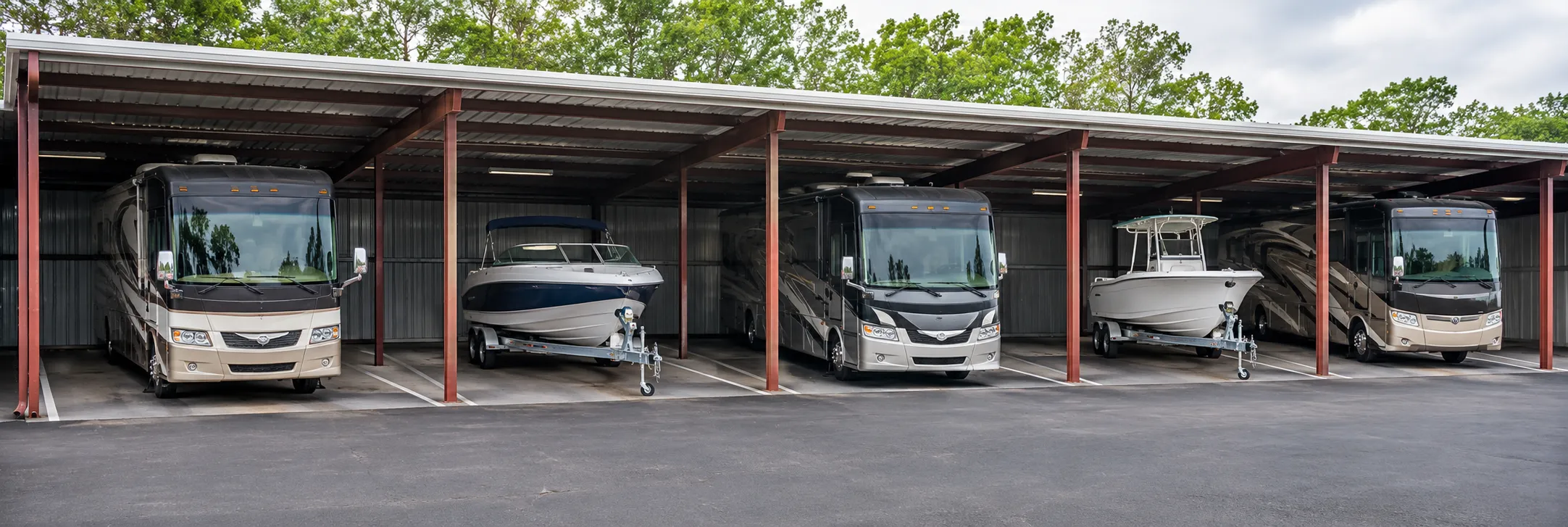
Boat and RV storage development starts with finding land that fits the business. The goal is a place where people can store RVs and boats on trailers. That may mean open parking, spaces under a roof, or spaces with walls and doors.
A low land price is just one part of the choice. You also need to know how the land can be used, what can fit, and what the whole project may cost. Work through those questions before you commit to the land or a full set of plans.
This guide takes you from the first site search to the start of construction. It is for land-based storage, rather than boat slips on the water. IPG helps owners review sites, plan layouts, compare bids and manage the build.
Plan your storage project with IPG
1. Pick a market and the type of space
Start with a short brief. Name the area you want to serve, your land budget, and the types of vehicles you want to store. Note whether this is a new site or an added part of a self-storage property.
Think about the trips your future renters make. Are homes, boat ramps, lakes or main roads easy to reach? Drive the routes at times your users may travel. A site that looks close on a map may be hard to reach with a long trailer.
Ask boat and RV owners about their needs. Where do they store now? How long is the RV, or the truck and trailer together? Do they want a roof, a closed space, or open parking? How far will they drive? Keep their answers, rather than guessing from the number of homes nearby.
Look at nearby storage choices
Make a list of nearby sites, including self-storage sites with vehicle spaces. Check each one in the same way:
- What size and type of space is on offer?
- Is the space open, roof-covered or enclosed?
- Which types of boats and RVs does the site serve?
- What are the access hours and site rules?
- Is a space that size and type available today?
Write down the date and who gave each answer. Use these notes to learn what nearby sites offer and which needs local owners have raised. Keep the vehicle types, access needs and storage choices clear in your brief.
Check with the local planning office for new sites in the works. Keep proposed, approved and open sites in separate groups. A plan that has been filed is not the same as a site that is open.
Use these notes to choose an early mix of spaces. Our guides to covered boat storage and covered RV storage explain the roof-covered choice. A roof on posts is often called a canopy.
2. Find land and make a shortlist
Use more than one way to find land. Check public land listings and speak with brokers who know the area. Give them your brief so they can rule out sites that do not fit.
You can also look for land that is not listed for sale. Use parcel records to find the owner, then ask whether they would consider a sale. A parcel is a piece of land shown in the county’s records. An empty-looking lot may still have a use, a lease or an owner who does not want to sell.
Keep a short list of sites worth a closer look. Use the same notes for each one. Mark a missing fact as unknown, so it does not turn into a guess.
| Site note | What to record |
|---|---|
| Land and owner | Address, parcel ID, source, owner and next contact. |
| Price and terms | Asking price, known terms and any date you must meet. |
| Road and services | Possible entrance, road approach, water and power questions. |
| Allowed use | Who must confirm the storage use and what they have said. |
| Main concern | The open question most likely to change your choice. |
| Next step | The next call, who will make it and when an answer is due. |
County maps and owner records give you a place to start. For research across several sites, reSpots brings parcels, ownership, zoning, roads and local population data into one workspace. You can save sites and keep notes as the search moves on.
Research your next site with reSpots
Use the research to compare access and site limits. Save your sources and dates, then confirm key site facts with the people responsible for them.
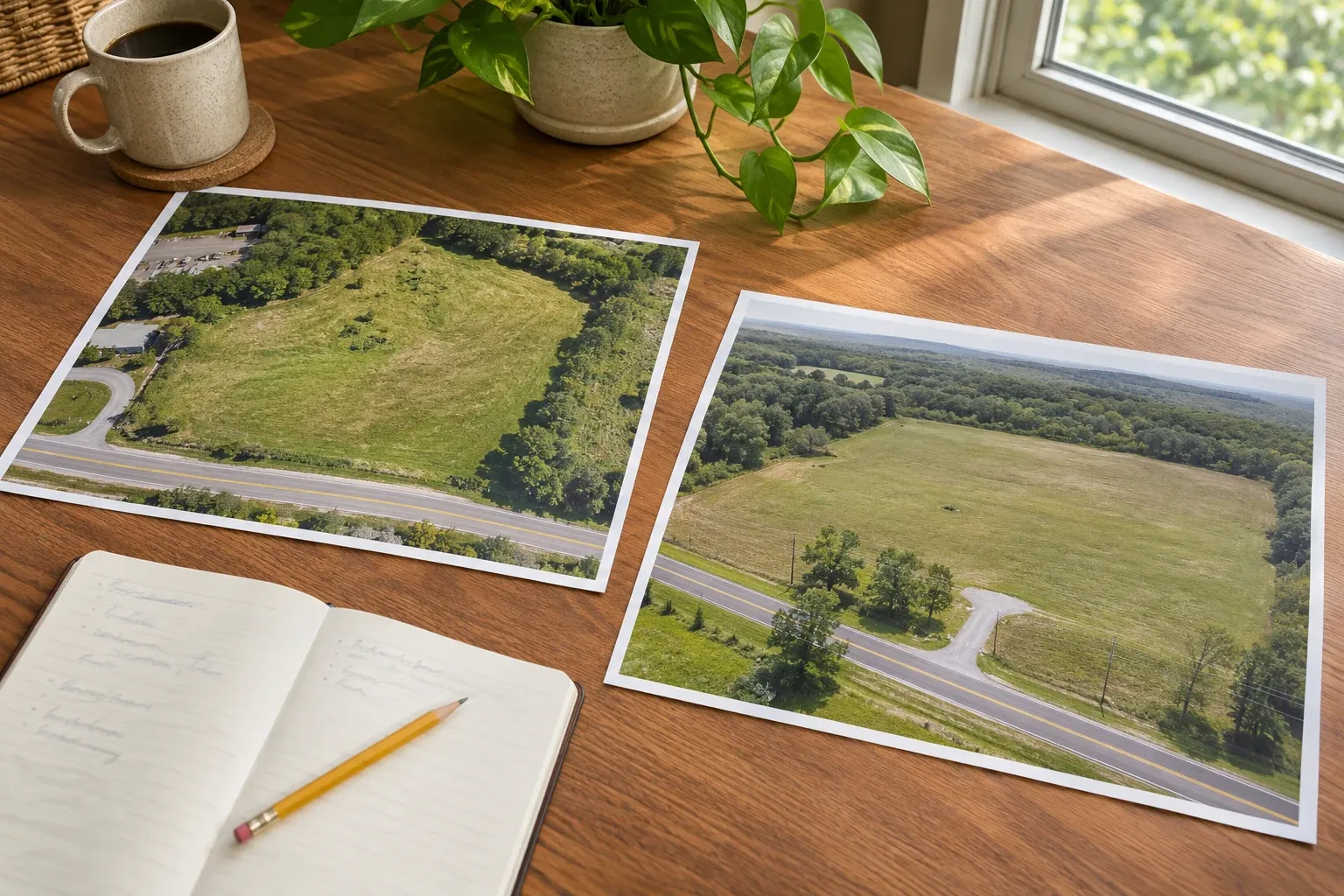
IPG’s deal sourcing and site review can help you compare land and choose which questions to work through next.
3. Check the land before you commit
A useful site check starts with the exact parcel and the use you plan. Tell local planning staff about open spaces, roofs, enclosed spaces, lights and hours. Ask how the use is classed, which reviews apply, and what must happen first. Keep their reply with your notes.
Then work through the points that may change the deal:
- Road access: Can the planned entrance serve the vehicles? Ask the road authority what it must review.
- Services: Ask the service providers about water, power and other needs. Find out where service can connect, what work is needed, and who will pay.
- Land records: Get the survey and title records that are available. Ask about shared access and rights that let others use part of the land.
- Ground and water: Check slope, drainage, flood maps and wetland clues. Save the map source and date, then ask the right specialist to resolve key unknowns.
A map is a starting point for those checks. It does not settle land boundaries, wetland limits or the right to build. Use the right people to confirm the facts that could change your deal.
Count usable space, not just acres
The whole parcel is not all parking space. Drives, gates, rainwater areas, roof posts and land you must leave clear take room too. A narrow entrance or an odd shape may change what fits.
Have the team test a first layout with the actual rigs you plan to serve. Follow a full trip from the road, through the gate, into a space and back out. Include the tow vehicle and trailer. Ask the local fire department what room its trucks need at the gate and inside the site.
Our boat and RV storage site planning guide covers these layout checks in more depth. Use it before treating a rough space count as a final plan.
If one site has a major unknown, name the person who can answer it. Set the next step and a date. You may choose to pursue the site, change the plan, seek more facts, or pass.
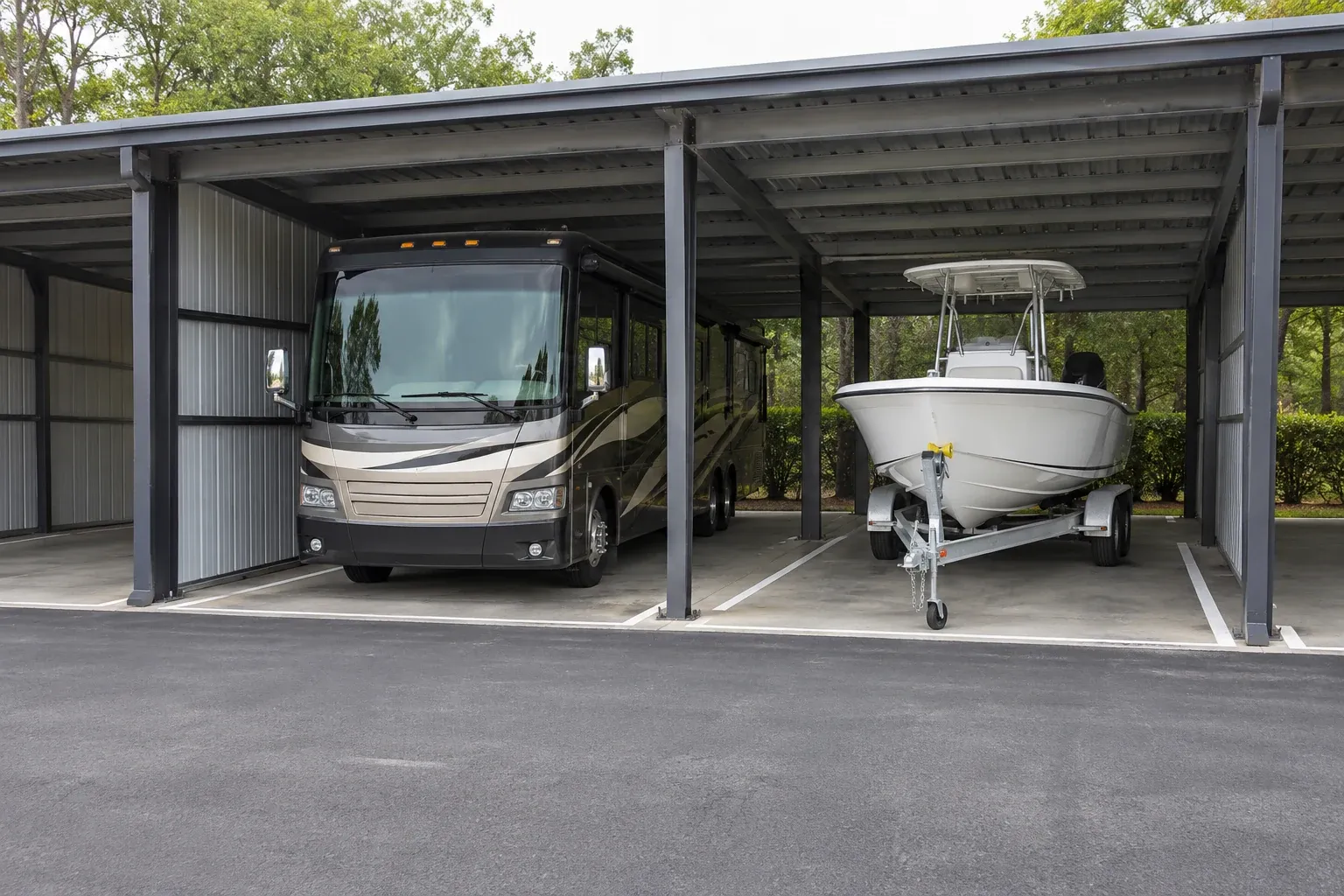
4. Review the full project cost
A first layout helps show the work the site needs. Mark the open, covered and enclosed spaces. If you plan to build in phases, show the work in each phase.
Include more than the roofs
Land is one cost. Ask the project team for costs that cover the whole scope:
- Land purchase, closing costs, surveys and site studies.
- Design work, local reviews and permits.
- Ground work, drainage and service lines.
- The parking surface, roof bases and roofs.
- Gates, fences, lights and any planned site features.
- Work needed to connect the site to roads and services.
Some work may serve more than one phase. The first phase may need the entrance or drainage work that later rows will also use. Ask the team what must be built first and what can wait.
Keep track of what has been priced
Mark each amount as a quote, an estimate or unknown. Save its date, the plans it is based on, and the work it covers. Ask who will price each gap. A roof quote alone is not a price for the full site.
Ask about costs that still depend on site checks or design work. Soil conditions, a new entrance or a long service line may change the work needed. Keep those open items in the cost review until the team has enough facts to price them.
When the layout changes, ask which prices need to be checked again. A moved roof row can affect its bases, drives, lights and drainage. Keep the current plans and cost notes together so the owner and project team review the same scope.
5. Get ready for plans, bids and the first work
Once a site looks worth pursuing, bring the research into one owner’s packet:
- The address, parcel IDs and proposed project boundary.
- Your storage mix, goals and first phase.
- Available survey, title, site reports and photos.
- Local planning, road and service-provider replies.
- The current layout and its space count.
- Project cost quotes, open pricing questions and key dates.
- Open questions, with a person and next step for each.
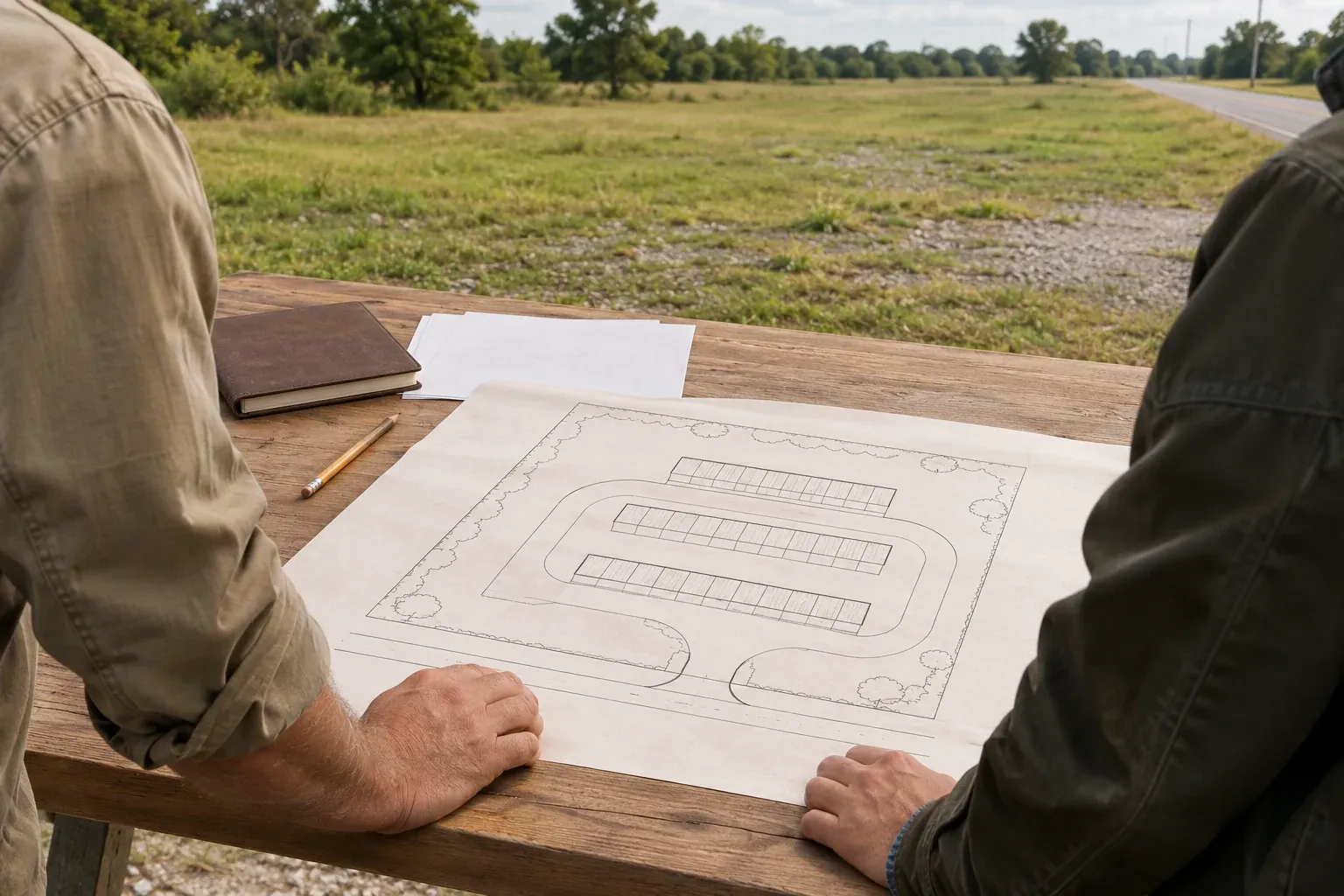
Give the design team the site facts it needs to build on the first layout. Check that the drawings work together. Roof posts, ground work, service lines and drive lanes need to fit the same plan.
When you seek bids, send each bidder the same dated plans and scope. The scope is the work you want priced. Ask what is left out, which costs may change, and who handles each part. Our canopy bid preparation guide helps you gather the details for that step.
Before crews start, confirm that the team has the permits and approvals needed for that work. Check that the plans, scope, site access and start date agree. Name who can approve changes and who will track required checks. At a working site, also plan where renters and deliveries will go.
IPG supports planning and design coordination, bid review and construction management. It helps owners connect the research to the next project choice. The responsible designers and local officials handle their design work and approvals.
For the stages after this point, read our boat and RV storage construction guide.
Have a site in mind? Bring the address or parcel ID, your notes and the next decision you face. IPG can help review where the project stands and what to work through next.
Common questions about boat and RV storage development
How much land do I need?
Start with the vehicles, space mix and site limits. Gross acres alone do not tell you how many spaces will fit. Have a first layout checked before you rely on a space count.
How do I find land that isn’t listed for sale?
Look for parcels that fit your brief, check owner records, and ask whether the owner would consider a sale. Brokers may also know owners who might sell. Treat availability and price as unknown until you have a reply.
Can I add boat and RV parking to a self-storage site?
It may be an option, but check the allowed use and the layout first. Review shared gates, drive lanes, fire access and space for later work. Keep ordinary self-storage visits in the plan too.
What should I send IPG first?
Start with the address or map pin, parcel ID, target storage mix and the next choice you need to make. Add any plans, photos, site notes and deadlines you have. You do not need every study in hand to discuss the next step.